

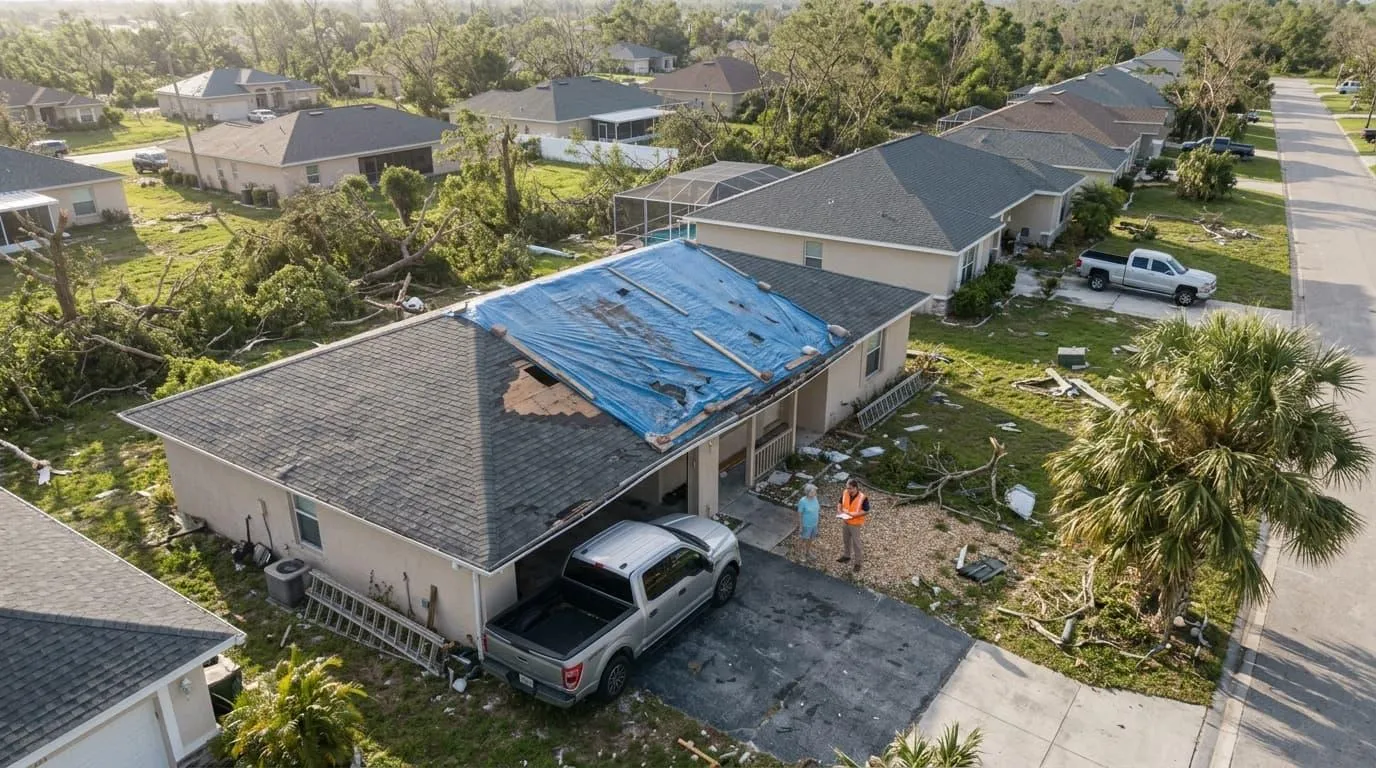
We’ve been watching Florida’s post-hurricane recovery closely, and what we found in the data is deeply concerning. Our analysis of state and national records shows storm chasers and fraudulent contractors are targeting Central Florida homeowners at unprecedented rates, with seniors bearing the brunt. Here’s what the numbers actually say.
The full breakdown is Roofing Services Central Florida Face Post-Hurricane Fraud Crackdown.
Three surprising findings
Finding 1: The scam-to-senior pipeline is deliberate, not coincidental
More than 60% of consumers who filed complaints in Florida’s largest post-hurricane fraud case were senior citizens. This isn’t random, it’s predatory targeting. Fraudsters specifically seek out elderly homeowners who are more likely to trust door-to-door “free inspection” offers and less likely to verify licensing independently.
Finding 2: A closed claim is often not a paid claim
The Wall Street Journal reported that the five largest U.S. home insurers collectively closed more than 44% of claims without payment in 2025, up from 36% a decade earlier. A claim closed without payment is not the same thing as a denial for fraud. The category can include claims under the deductible. For Florida homeowners with legitimate storm damage, a dated photo file and a written scope still matter, because the insurer decides what the policy pays.
Finding 3: One scheme hit 11 Florida counties
The Evolve Construction lawsuit spans Lee, Charlotte, Sarasota, Hillsborough, Polk, Osceola, Manatee, Volusia, St. Lucie, St. Johns, and Broward counties. This shows how storm fraud operations scale geographically. A contractor marketed in Central Florida could have accountability problems across the state.
Key findings
- $1,000,000+ taken from 80+ victims. Florida Attorney General’s Office, September 2026.
- 60%+ of complainants are seniors. Florida Attorney General’s Office, September 2026.
- 45% increase in questionable roofing claims (2020-2024). National Insurance Crime Bureau, 2025.
- 350,000+ Floridians targeted by disaster scammers in 2024. Instant Roofer Survey, April 2025.
- $5,000 to $80,000 insurance payments per property in the cited fraud cases. Florida Attorney General’s Office, September 2026.
- 44% of home insurance claims closed without payment (national, five largest home insurers). Wall Street Journal, May 2026.
- 428 unlicensed or rogue businesses flagged in Florida. IBISWorld Florida Market Report, March 2026. This is the figure supplied for the campaign.
- 11 Florida counties affected by a single roofing fraud scheme. Florida Attorney General’s Office, September 2026.
- $9.0 billion Florida roofing contractor market size. IBISWorld, March 2026.
- 38% increase in contractor fraud incidents (2023-2025). National Insurance Crime Bureau, May 2026.
What this means for Central Florida homeowners
If you own a home in Lakeland, Plant City, Winter Haven, Wesley Chapel, Auburndale, or Davenport, the same pattern can show up at your door after a storm. The supplied data points to three pressures at once: more storm chasers operating with fewer credentials, more claims closed without payment, and a roofing market the campaign values at $9 billion.
Skipping the repair is not the answer. Verification, photos, and a written scope are. A licensed contractor with local roots has a reputation to protect. A transient operator does not.
Issac Turpin
“Floridians know to check for a license, but scammers use fake contracts with official-looking logos,” said Issac Turpin, CEO of True Corp and one of the original founders of True Roofers. “We tell homeowners to verify through myfloridalicense.com and never sign anything on the spot, no matter how urgent the damage looks. Storm chasers don’t have local reputations to protect. True Roofers has been in Central Florida for 12 years, we’re part of a family of companies with 100,000+ clients served. We can’t disappear after the storm, and we don’t want to.”
Methodology
Our analysis drew from Florida Attorney General’s Office filings, National Insurance Crime Bureau reports, Wall Street Journal investigative data, IBISWorld market research, and the Instant Roofer survey of disaster-displaced Floridians. All statistics reflect the most recent available data as of October 2026, as supplied for this campaign. We did not re-pull those source documents before publishing this page.
What to do next
The storm fraud pattern is real. Homeowners who document damage, verify contractors, and keep the claim conversation with their own insurer are in a stronger position than homeowners who sign on the driveway.
Read the complete analysis: Roofing Services Central Florida Face Post-Hurricane Fraud Crackdown.
Need the roof photographed and the scope written down? See how True Roofers documents storm damage. We do not file the claim, and we do not adjust it. License CCC1332725.
