


Watch: real Central Florida roof tarping job
Watch videoRoof Tarping in Lakeland, Plant City, and Polk County
We tarp roofs in Lakeland first, then Plant City, Winter Haven, Auburndale, Wesley Chapel, and Davenport. A call after dark goes to the Lakeland shop at 2829 Badger Rd #19 or the Plant City yard. Call (813) 800-1800 or the 24/7 line (863) 880-2041.
The tarp is a cover so the rain stops until the permanent repair is on the board. You get the price in writing after we see the opening. We photograph the damage. We do not file the claim or adjust it. License CCC1332725.
Where We Tarp
Lakeland, Plant City, Winter Haven, Auburndale, Wesley Chapel, and Davenport. That is the list. The crew leaves from Badger Road or from 4000 N Frontage Rd in Plant City, so a Polk or east Hillsborough roof is a drive we already make.
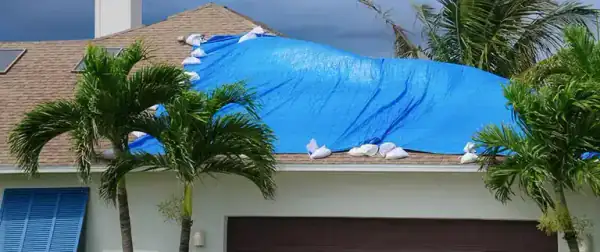
The sheet covers the opening and runs onto shingles that still hold a screw. Fasteners go into sound wood, not into rot. Edges stay tight enough that wind cannot get under them. You leave with a written tarp price and photos of the damage from before the plastic went on.
A blue tarp and a few bricks is a different job. If water is still hitting the ceiling after we leave, call the same line. The permanent repair is scheduled while the cover is still tight. Sun and afternoon wind in Polk shorten a tarp well before the 90-day mark.
Why You Need Emergency Roof Tarping Services
Florida's unpredictable weather can cause sudden and severe roof damage. Without immediate protection, a small leak can turn into thousands of dollars in interior damage.
A professionally installed roof tarp can protect your property for up to 90 days while you arrange permanent repairs or replacement. Roof tarping protects your home from:
- Water intrusion and interior flooding
- Mold and mildew growth
- Structural deterioration
- Debris and pest entry
- Further weather-related damage
What Emergency Roof Tarping Costs in Central Florida and What Drives the Price
Most emergency tarping jobs in this market fall somewhere between roughly $300 and $1,500. Large, steep, or two-story roofs run higher. Those are general Central Florida market figures, not True Roofers prices. We inspect the roof first and give you an exact number before anyone starts working, so the bill never arrives as a surprise.
Five things move the price up or down, and every honest quote you get should reflect them:
- Square footage covered: a tarp over one blown-off section costs less than one spanning half a roof plane.
- Roof pitch: steeper slopes take longer to work safely and need more anchoring.
- Height: a two-story or three-story roof means more equipment, more fall protection, and more crew time.
- After-hours dispatch: a two a.m. call during a storm week costs more than a Tuesday morning appointment.
- Accessibility of the damage: tight side yards, screen enclosures, pool cages, and downed limbs all slow access to the damaged area.
Is Emergency Tarping a Covered Expense?
Usually, yes, when the damage came from a covered event such as a storm, hurricane, hail, or a fallen tree. There is a second point homeowners miss, and it matters more than the first one. Most Florida policies require you to mitigate damage once you know about it. Tarping is what mitigation looks like on a roof.
That cuts both ways. Get the roof covered and documented, and you have met the requirement. Leave it open for a week while the ceiling comes down, and your insurer can argue the interior damage was avoidable and reduce what it pays. We photograph the damage before, during, and after the tarp goes on, and that record goes straight into your claim file.
How Long a Roof Tarp Lasts in Florida Weather
A professionally installed roof tarp can protect your property for up to 90 days. Read that as a ceiling rather than a promise. Florida shortens it.
UV is the main culprit. Sun breaks down tarp fabric faster here than almost anywhere else in the country, and a tarp that would hold a full season in Ohio can go brittle in half the time on a Polk County roof. Wind is the other one. Every afternoon storm works at the fasteners and the edges, and each cycle loosens what is holding the tarp down.
So a tarp is a bridge to a repair, not a way to get through hurricane season. Use the time it buys to get the inspection done, send photos to your carrier, and schedule the permanent work. If a tarp on your roof is approaching two or three months old, call us before it fails rather than after.
What Causes Roof Damage in Central Florida?
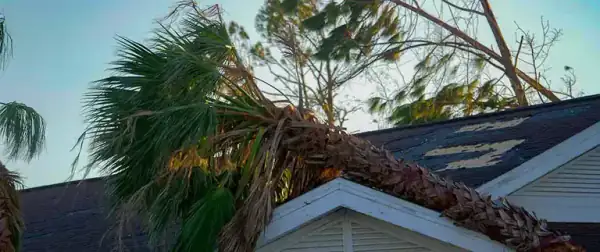
Florida homes face unique roofing challenges due to extreme weather conditions. If your roof has been damaged by any of these events, emergency roof tarping is your first line of defense. The most common causes of roof damage include:
- Heavy storms and high winds: shingles can be torn off or lifted, exposing the roof deck
- Hurricanes: severe wind and rain can cause catastrophic damage
- Hail: can puncture or crack roofing materials
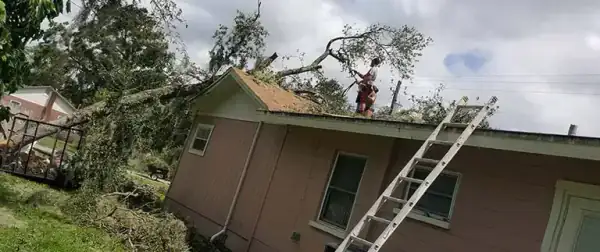
- Fallen trees or branches: direct impact can create large openings
- Fire damage: compromises roof integrity and requires immediate coverage
How Professional Roof Tarp Installation Works
Most Florida homeowners' insurance policies cover emergency roof tarping when the damage is caused by storms, hurricanes, or other covered events, and we document everything your claim needs along the way.
True Roofers follows a fast, safe, and effective process to secure your property:
- Emergency inspection: we assess the extent of the damage and identify all vulnerable areas.
- Tarp selection and preparation: we use heavy-duty, weather-resistant tarps designed for Florida's climate.
- Secure installation: our team safely fastens the tarp to your roof using proper anchoring techniques to withstand wind and rain.
- Insurance documentation: we photograph the damage for your file. You send it to your carrier. We do not file or adjust the claim.
Tarping a Flat or Low-Slope Roof
Tarping a flat roof is a different job from tarping a pitched one, and crews that only work on shingles tend to get it wrong. On a sloped roof gravity moves the water off. On a low-slope or flat roof there is nothing pulling the water anywhere, so it pools on top of the tarp, finds the seams, and works its way through whatever the tarp was supposed to protect.
That changes the method. The tarp has to be sized well past the damage on all sides, laid so the seams shed toward a drain or scupper instead of into a low spot, and weighted or mechanically fastened in a way that does not puncture a membrane roof and create new leaks. On a modified bitumen or TPO roof, the wrong fastener choice turns a one-spot repair into a much larger one.
Flat and low-slope roofs sit on plenty of Central Florida homes with additions or Florida rooms, and on most of the small commercial buildings around Lakeland and Plant City. If the building is commercial, our team handles the tarp and the permanent work together.
Two Florida Roof Rules Worth Knowing Before You File
Two rules come up constantly on storm calls, and knowing them ahead of time saves arguments later.
The 25% rule comes from the Florida Building Code. If more than 25% of a roof section is repaired or replaced within any 12-month period, that section generally has to be brought up to current code, which in practice can mean replacing the whole thing rather than patching it. There is an important carve-out: roofs built or replaced under the 2007 Florida Building Code or later can often have just the damaged portion repaired to code instead. Which side of that line your roof falls on changes the scope of your claim.
The 15 year rule comes from Florida insurance law. An insurer generally cannot refuse to write or renew a policy on a roof under 15 years old on the basis of age alone. Once a roof passes 15 years, you can have it inspected, and if the inspection shows at least five years of useful life remaining, the insurer generally cannot refuse coverage solely because of the roof age. That inspection report is worth having on file before you need it.
Neither rule decides your claim by itself, and policies vary. We measure the roof, write what we find, and tell you what we think the scope should be. You take that to your carrier.
Why Hire True Roofers for Emergency Roof Tarping
Attempting DIY roof tarping puts you at serious risk of injury, and improper installation can make the damage worse.
Here is why homeowners trust True Roofers:
- 24/7 emergency response: we are available around the clock
- Licensed and insured professionals: safety and quality on every job
- Fast service: we respond quickly to prevent further damage
- Photos for your carrier: we document the roof. We do not file the claim
- 100,000+ customers served: trusted across Central Florida for over 12 years
Signs You Need Emergency Roof Tarping
After a storm or severe weather event, inspect your roof for these warning signs. If you notice any of them, contact True Roofers immediately for emergency tarping:
- Missing, broken, or lifted shingles
- Visible holes or punctures in the roof deck
- Water stains on ceilings or walls
- Active leaks or dripping water
- Exposed underlayment or roof structure
Get Emergency Roof Tarping Across Central Florida
True Roofers provides fast, reliable roof tarping throughout Central Florida, including Lakeland, Plant City, Winter Haven, Wesley Chapel, Auburndale, and Davenport. Do not see your area? Call us at (813) 800-1800, we may still be able to help.
Do not wait for a small leak to become a major disaster. Call (813) 800-1800 for emergency roof tarping any hour of the day, or reach our 24/7 inspection line at (863) 880-2041. We quote the job before we start it. Photos go in your file. You send them to your insurer.
Roof Tarping Across Central Florida
Local crews dispatched from Lakeland, Plant City, and Auburndale: